Debt Snowball vs Avalanche on an Irregular Income
The debt snowball and the debt avalanche are the two most common ways to decide which debt to pay off first. Both have you pay the minimum on every debt and put every extra dollar toward one "target" debt. The difference is how you choose the target. This guide explains both, then shows how to make either one work when your income isn't the same every month.
Debt snowball: smallest balance first
List debts from smallest balance to largest. Put all your extra money on the smallest one. When it is paid off, roll its payment into the next smallest, and so on. The payment "snowballs" as each debt disappears.
Why people like it: you clear whole accounts quickly, which can keep you motivated.
Debt avalanche: highest interest rate first
List debts from highest interest rate (APR) to lowest. Put all extra money on the highest-rate debt first.
Why people like it: it usually costs less in total interest and can finish sooner, because you attack the most expensive debt first.
Worked example
| Debt | Balance | APR | Minimum |
|---|---|---|---|
| Store card | $600 | 27% | $25 |
| Credit card | $4,500 | 24% | $110 |
| Car loan | $9,000 | 7% | $260 |
- Snowball order: store card ($600), credit card ($4,500), car loan ($9,000).
- Avalanche order: store card (27%), credit card (24%), car loan (7%).
Here both methods start the same way. They differ when a small balance has a low rate. For example, if you also had a $300 medical bill at 0%, snowball would pay it first; avalanche would leave it until last. The more your balances and rates disagree, the bigger the interest difference between the methods. Either method beats paying only minimums.
Which should you choose?
- Choose avalanche if you want to minimize interest and you'll stick with it even when progress feels slow.
- Choose snowball if quick wins will keep you going, and the interest difference for your debts is small.
- Run both on your real numbers. A payoff spreadsheet that shows the debt-free date and total interest for each method makes the choice concrete.
The irregular income problem
Freelancers, gig workers and anyone paid on commission or tips face a different problem: you can't promise the same extra payment every month. A plan built on an average month breaks the first time a slow month arrives. Here is a structure that holds up.
1. Budget on your baseline month
Look back over the last 6 to 12 months and find a lean but realistic month, not your worst ever and not your average. That is your baseline income. Build your budget, minimum payments and a modest fixed extra debt payment so they all fit inside the baseline.
2. Set aside taxes first if you're self-employed
If no one withholds tax from your pay, move a set percentage of every payment to a separate account before anything else (see our estimated tax guide). Money for taxes is not money for debt.
3. Build a cash buffer
Aim for a buffer that covers the gap between a bad month and your baseline. When a short month comes, you draw on the buffer instead of a credit card.
4. Split bonus months by a rule
When a month comes in above baseline, decide in advance how to split the extra, for example 50% to debt, 20% to sinking funds, 20% to the buffer, 10% to spend. A rule removes the temptation to decide in the moment.
5. Use sinking funds for predictable irregular costs
Car registration, insurance premiums, holidays and annual subscriptions are not emergencies; they're known costs on an irregular schedule. Divide each one by the months until it is due and save that amount monthly.
6. Log extra payments when they happen
Tax refunds, bonuses and gifts can go straight to the target debt in the month they arrive. Record them so your payoff date updates.
Quick checklist
- List every debt with balance, APR and minimum payment.
- Choose snowball or avalanche (or compare both on your numbers).
- Find your baseline month and build the budget around it.
- Set aside tax if you are self-employed.
- Fund a cash buffer and sinking funds.
- Write down your bonus-month split rule.
- Review monthly and celebrate each paid-off debt.
Lowering grocery spending is one place many households find extra money for debt; the household money tools section lists a meal plan cost tracker for that.
Want this as a ready-made template?
Everything above works with pen and paper. If you would rather have the math done for you, these are our related templates. They are paid digital downloads on Etsy; check each listing for current price, file format and details.
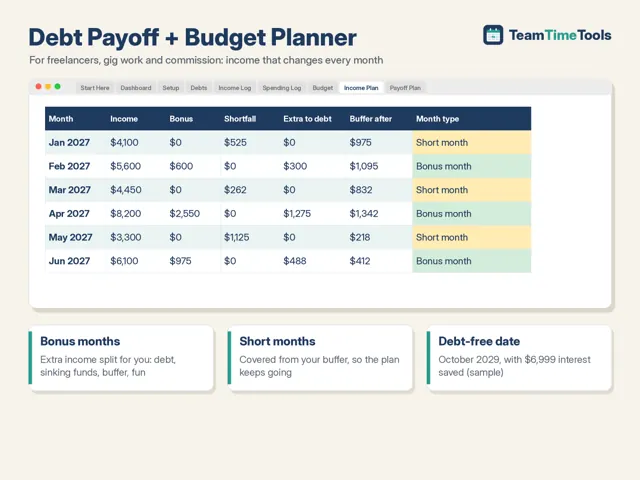
2027 Debt Payoff Planner & Budget for Irregular Income
Snowball or avalanche payoff order for up to 12 debts, a budget built around a lean month, and a plan for splitting bonus months between debt, sinking funds and a cash buffer. Excel and Google Sheets.
View on Etsy : 2027 Debt Payoff Planner & Budget for Irregular Income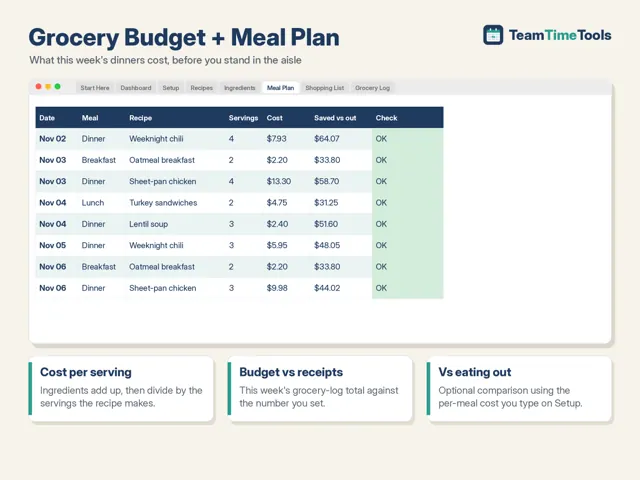
Grocery Budget & Meal Plan Cost Tracker
Ingredients roll up into recipe cost per serving, the meal plan multiplies by servings, and a dashboard compares the plan with your grocery budget. Excel and Google Sheets.
View on Etsy : Grocery Budget & Meal Plan Cost TrackerSources
This guide is general information, not professional advice. Rules and recommendations change; confirm with the official sources above.